

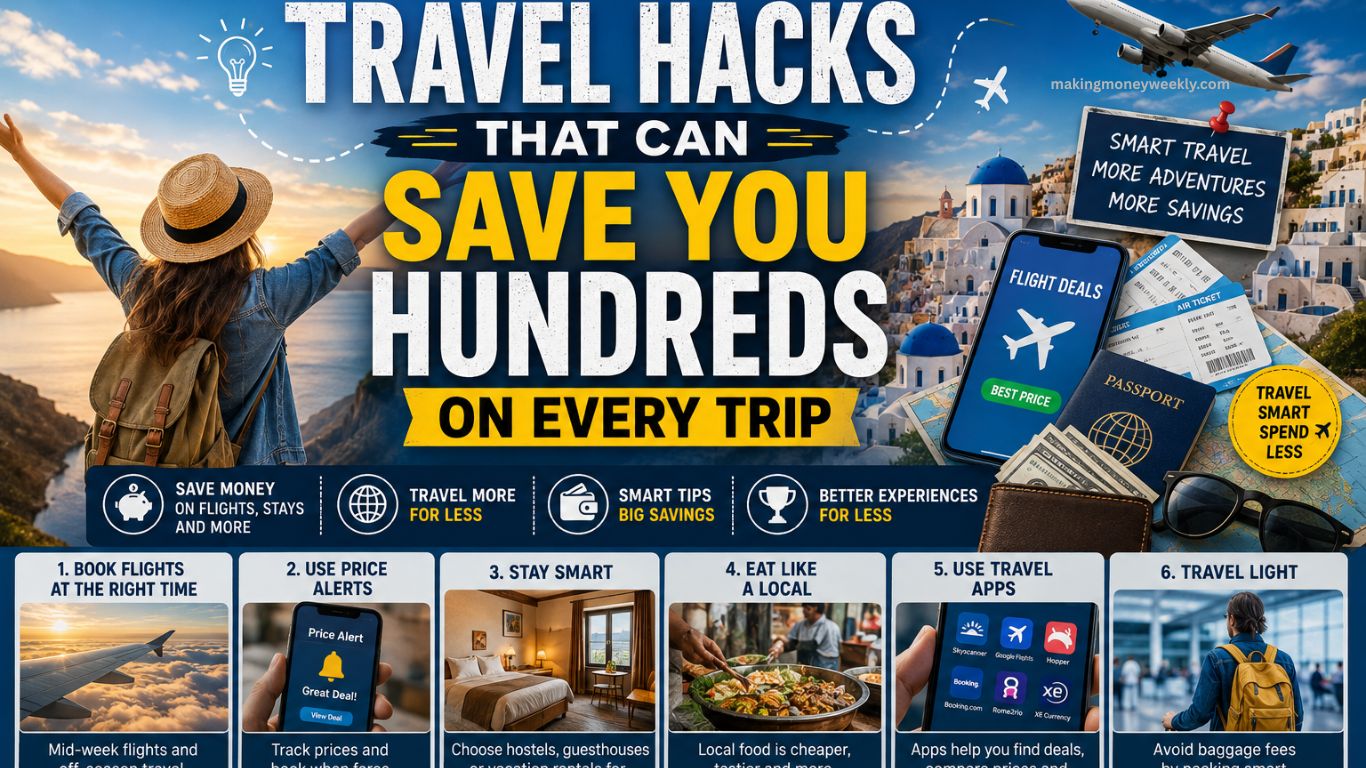
Travel does not have to drain your bank account. With smart planning, flexible choices, and a few practical travel hacks, you can reduce major expenses without sacrificing comfort or memorable experiences. From finding cheaper flights to choosing affordable accommodation, small decisions can create significant savings.
Whether you are planning a weekend getaway, family vacation, international adventure, or solo trip, knowing how to spend wisely can make your budget go much further. The right strategies help you avoid unnecessary fees, discover better deals, and enjoy more experiences for less money.
Read More: 25 Best Travel Destinations to Explore in 2026
Book Flights at the Right Time
Flight prices can change frequently based on demand, season, route, and availability. Instead of booking immediately after deciding on a destination, compare prices across different dates and nearby airports. Flexible travel dates can reveal significantly cheaper fares.
Traveling during weekdays or less popular periods can also reduce airfare. Setting price alerts can help you monitor fare changes and book when prices become more attractive.
Travel During the Off-Season
Peak travel seasons usually bring higher prices for flights, hotels, attractions, and transportation. Visiting a destination during its shoulder or off-season can provide better value while avoiding large crowds.
Off-season travel can also create a more relaxed experience. Hotels may offer lower rates, restaurants can be less crowded, and popular attractions may have shorter waiting times.
Choose Accommodation Strategically
Hotels are not always the most affordable option. Depending on your destination and trip length, guesthouses, hostels, vacation rentals, or budget hotels may provide better value.
Location also matters. Staying slightly outside the busiest tourist district can reduce accommodation costs considerably. Choose a property close to reliable public transportation so savings on lodging do not disappear through expensive daily transportation.
Compare Transportation Options
Rental cars, taxis, trains, buses, and rideshare services can have very different costs. Compare transportation options before your trip instead of automatically choosing the most convenient option.
For city travel, public transportation can often provide substantial savings. Walking between nearby attractions can reduce transportation expenses while giving you a better opportunity to explore local neighborhoods.
Pack Light to Avoid Extra Fees
Baggage fees can quickly increase the cost of budget flights. Packing efficiently can help you avoid paying for additional checked bags or oversized luggage.
Choose versatile clothing, limit unnecessary items, and check your airline’s baggage rules before leaving home. A well-organized carry-on can make your journey cheaper and easier.
Save Money on Food
Eating at tourist-focused restaurants for every meal can become one of the largest expenses during a vacation. Explore local restaurants, markets, bakeries, and affordable food spots instead.
If your accommodation includes breakfast, take advantage of it. Carrying snacks and a reusable water bottle can also prevent frequent purchases during sightseeing.
Use Free Attractions
Many destinations offer impressive experiences that cost nothing. Public parks, walking routes, historic neighborhoods, beaches, museums with free-entry periods, cultural events, and scenic viewpoints can provide memorable experiences without expensive tickets.
Research free activities before your trip and balance paid attractions with complimentary experiences. This approach can reduce your daily spending without making your vacation less enjoyable.
Avoid Unnecessary Tourist Fees
Tourist areas often have higher prices for basic products and services. Research local prices before purchasing transportation, food, souvenirs, or activities.
Watch for hidden fees when booking hotels, flights, tours, and rental vehicles. Reading the full price breakdown before payment can help you avoid unexpected charges.
Use Travel Rewards Wisely
Credit card rewards, airline miles, hotel loyalty programs, and travel points can reduce future travel expenses when used responsibly. Before signing up for any program, understand its fees, restrictions, expiration rules, and redemption options.
Using existing rewards for flights, accommodation, or upgrades can sometimes save hundreds of dollars on a trip. Avoid unnecessary spending simply to earn points, because rewards only create value when used strategically.
Travel With a Reusable Water Bottle
Buying bottled water repeatedly can become surprisingly expensive, especially during long vacations. A reusable bottle lets you refill whenever safe drinking water is available.
Some destinations also provide public refill stations, making this simple habit an easy way to reduce daily expenses while producing less plastic waste.
Book Experiences Directly When Appropriate
Tourist intermediaries can sometimes add service charges to activities and excursions. Compare official attraction websites and reputable local providers before booking.
However, do not automatically choose the cheapest option. Check reviews, cancellation policies, inclusions, and safety standards to ensure the lower price represents genuine value.
Use Local SIM or eSIM Options
International roaming charges can create unexpected expenses. Depending on your destination, a local SIM or eSIM may provide a more affordable way to stay connected.
Compare data packages before traveling and check whether your existing mobile provider offers an international plan that fits your needs. Reliable internet can also help you use maps, public transportation apps, translation tools, and travel platforms without depending on expensive roaming services.
Plan a Realistic Daily Budget
A realistic travel budget gives you control over your spending. Estimate costs for accommodation, transportation, food, activities, shopping, and unexpected expenses before departure.
Avoid creating an unrealistically low budget that forces you to constantly worry about money. Instead, identify where you can spend freely and where you can cut costs. This balance makes saving easier without reducing enjoyment.
Avoid Currency Exchange Mistakes
Currency exchange fees can quietly reduce your travel budget. Compare exchange rates and transaction fees before exchanging money or making international purchases.
Using a payment method with reasonable foreign transaction fees can also help reduce unnecessary costs. Always check the final amount before completing a transaction, particularly in tourist-heavy locations.
Travel Insurance Can Prevent Major Expenses
Saving money does not mean eliminating important protection. Unexpected cancellations, delays, lost luggage, or emergencies can create high costs during international travel.
Travel insurance can provide financial protection depending on the policy and destination. Compare coverage carefully rather than choosing a policy based only on the lowest price.
Take Advantage of Flexible Travel Dates
Flexibility is one of the strongest tools for saving money. A difference of one or two days can sometimes produce a noticeable change in flight or hotel prices.
Search several departure and return dates before making a final booking. If your schedule allows flexibility, consider traveling midweek or adjusting your trip around major holidays and local events.
What is the best travel hack for saving money?
Booking flexible dates, comparing prices, and traveling during off-season periods can provide some of the biggest savings.
How can I save money on flights?
Compare different travel dates, check nearby airports, set fare alerts, and consider flying on less busy weekdays.
How can I reduce hotel costs?
Compare accommodation platforms, consider staying outside tourist centers, and look for properties offering free breakfast or other useful amenities.
How can I save money on food while traveling?
Eat at local restaurants, visit markets, use included hotel breakfasts, and carry affordable snacks during sightseeing.
Is traveling during the off-season cheaper?
Yes, off-season travel often offers lower prices for flights, hotels, attractions, and transportation while reducing tourist crowds.
How can I avoid unexpected travel expenses?
Create a realistic budget, check baggage and booking fees, understand cancellation policies, and research transportation and currency charges before traveling.
Can travel rewards really save money?
Yes. Airline miles, hotel points, and credit card rewards can reduce eligible travel expenses when used responsibly and strategically.
Conclusion
Saving hundreds on every trip does not require sacrificing comfort or skipping memorable experiences. Smart flight booking, affordable accommodation, local dining, efficient transportation, flexible dates, and careful spending can significantly reduce travel costs.
