

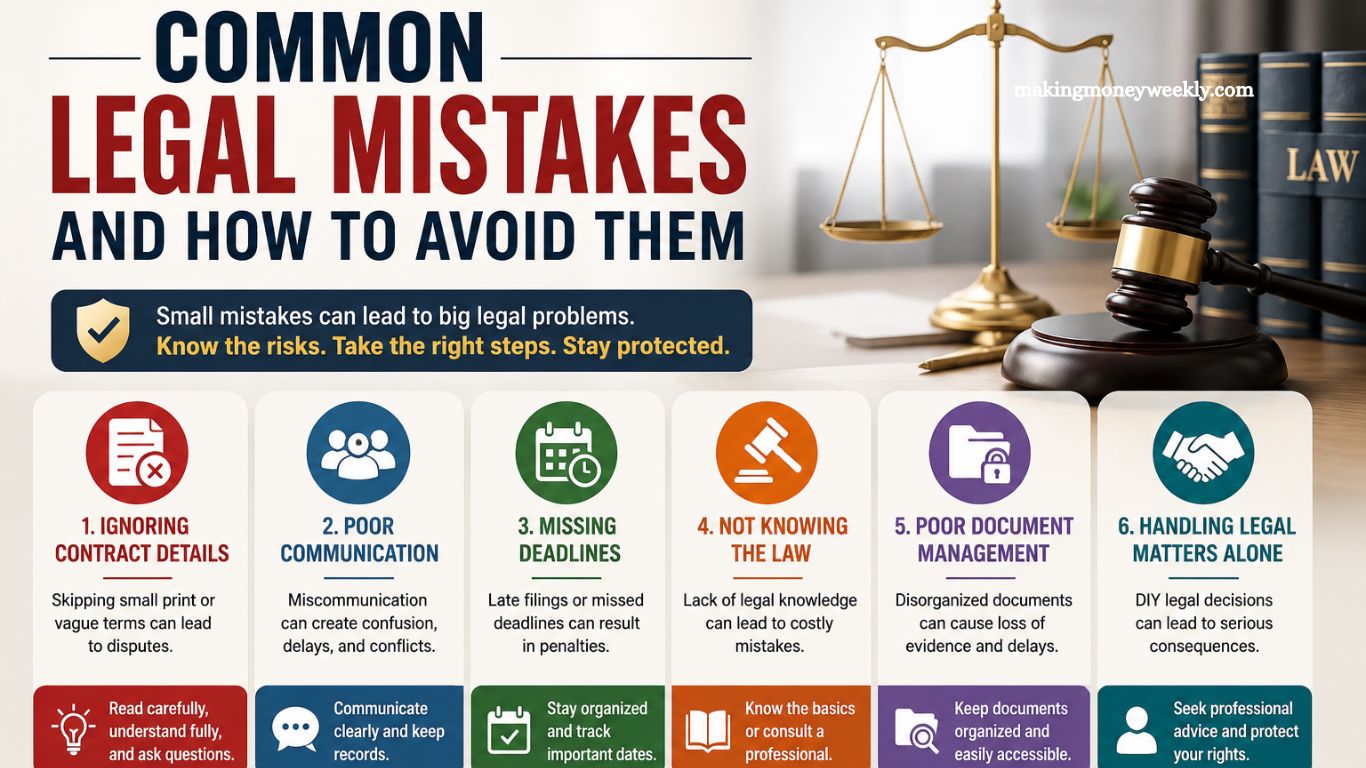
Legal mistakes often occur in daily life and business activities without clear warning. Many individuals and organizations face financial loss, disputes, or compliance issues due to simple oversights that could have been prevented with proper awareness.
Ignoring written agreements, misunderstanding contract terms, missing deadlines, or failing to keep proper records are among the most common errors that lead to legal complications. In many cases, these issues do not arise from intentional wrongdoing but from a lack of knowledge or attention to detail.
Understanding how legal systems work and recognizing potential risks is essential for avoiding unnecessary problems. A careful approach to documentation, communication, and decision-making can significantly reduce exposure to legal trouble.
This article provides a clear overview of common legal mistakes and practical methods to avoid them. It is designed to help readers build stronger habits, protect their interests, and make more informed choices in both personal and professional situations.
Read More: New Laws Coming in 2026 and How They Affect Everyday Life
Ignoring Written Agreements
One of the most common legal mistakes is relying on verbal agreements. Even when trust exists between parties, verbal arrangements create risk because terms are difficult to prove.
How to avoid it:
- Always document agreements in writing
- Include clear terms, responsibilities, and deadlines
- Ensure both parties sign the document
- Store copies in secure, accessible locations
Written contracts reduce misunderstandings and strengthen legal protection.
Not Reading Contracts Carefully
Many people sign contracts without reviewing details. Hidden clauses, penalties, or obligations often cause problems later.
How to avoid it:
- Read every section before signing
- Focus on termination clauses, fees, and obligations
- Ask questions about unclear terms
- Seek legal review for complex agreements
Careful review prevents unexpected liabilities.
Missing Legal Deadlines
Legal systems operate under strict timelines. Missing deadlines for claims, filings, or responses can weaken or completely remove legal rights.
How to avoid it:
- Track all important dates in a calendar system
- Set reminders well before deadlines
- Consult professionals when unsure about timing rules
Time management is essential in legal matters.
Poor Record Keeping
Lack of proper documentation can damage legal positions in disputes. Missing receipts, emails, or contracts often creates unnecessary complications.
How to avoid it:
- Maintain organized digital and physical records
- Save communication related to agreements
- Back up important files regularly
- Keep financial and legal documents separate and labeled
Strong records provide clear evidence when needed.
Misunderstanding Legal Obligations
Many legal problems arise from a misunderstanding of responsibilities under law or contract. Assumptions often replace accurate knowledge.
How to avoid it:
- Read relevant legal requirements carefully
- Consult qualified professionals when needed
- Avoid assumptions about rights or duties
- Stay updated on regulation changes
Clear understanding reduces risk significantly.
Using Generic Online Templates Without Review
Online templates can be useful, but they often lack customization for specific situations or jurisdictions.
How to avoid it:
- Use templates only as a starting point
- Adjust terms to match actual needs
- Have a lawyer review important documents
- Ensure compliance with local laws
Proper customization improves legal reliability.
Delaying Professional Legal Advice
Waiting too long to consult a legal professional often increases damage or limits available solutions.
How to avoid it:
- Seek advice early in disputes or contracts
- Do not ignore the warning signs of legal issues
- Treat legal consultation as preventive protection
Early action usually reduces cost and complexity.
Overlooking Privacy and Data Protection Rules
Individuals and businesses often fail to protect sensitive data properly, leading to breaches or compliance violations.
How to avoid it:
- Use secure systems for storing personal data
- Limit access to sensitive information
- Follow applicable data protection laws
- Regularly update security practices
Data protection is now a critical legal requirement in many regions.
Frequently Asked Questions (FAQs)
What are the most common legal mistakes people make?
The most common legal mistakes include ignoring written contracts, not reading agreement terms carefully, missing deadlines, poor record keeping, and misunderstanding legal obligations. These errors often lead to disputes, penalties, or financial loss.
Why are written agreements important?
Written agreements provide clear proof of terms and responsibilities between parties. They reduce misunderstandings and help protect legal rights if a dispute arises.
What happens if legal deadlines are missed?
Missing legal deadlines can result in loss of rights, dismissal of claims, penalties, or inability to take legal action. Courts and authorities usually enforce strict timelines.
Can online contract templates be used safely?
Online templates can be used as a starting point, but they should be reviewed and customized according to specific needs and local laws. A professional review is recommended for important matters.
When should legal advice be sought?
Legal advice should be sought early, especially when entering into contracts, facing disputes, or dealing with complex legal obligations. Early consultation helps prevent costly mistakes.
How does poor record-keeping affect legal cases?
Poor record-keeping weakens evidence in disputes. Without proper documentation, it becomes difficult to prove claims, defend rights, or verify agreements.
Is verbal agreement legally valid?
In some cases, verbal agreements may be legally valid, but they are difficult to prove. Written agreements are always safer and more reliable.
Conclusion
Common legal mistakes often arise from small oversights that accumulate into serious consequences over time. Issues such as unclear agreements, missed deadlines, weak documentation, and misunderstanding of legal responsibilities can affect both individuals and businesses. Most of these problems are preventable with careful attention, proper planning, and consistent legal awareness. Developing simple habits like using written contracts, reviewing documents thoroughly, maintaining organized records, and seeking professional guidance when necessary can significantly reduce legal risks.
