

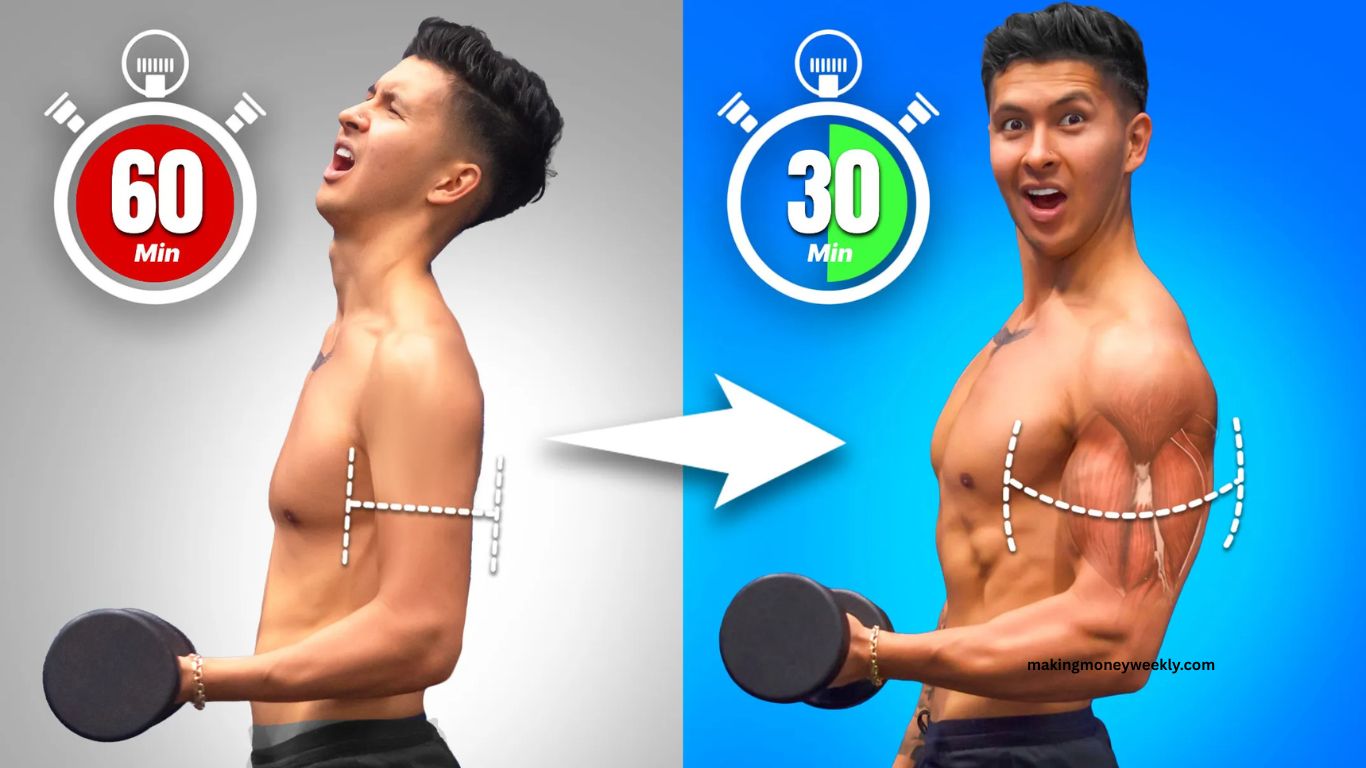
Building muscle quickly requires more than spending long hours in the gym. Many people believe longer workouts automatically produce better results, but science shows that workout quality, proper nutrition, and smart recovery create faster muscle growth. A focused approach helps maximize every minute while reducing fatigue and preventing unnecessary effort.
Achieving a stronger physique comes from following proven training principles instead of random exercises. When every workout has a clear purpose, your muscles receive the right stimulus for growth. Combining progressive training, balanced nutrition, and consistent recovery creates impressive results without wasting valuable time.
Read More: 15 Science-Backed Fitness Habits That Deliver Real Results
Why Efficient Muscle Building Matters
Many gym-goers spend hours performing unnecessary exercises that provide little benefit. Effective muscle growth depends on training intensity, exercise selection, and recovery rather than workout duration. Short, focused sessions often outperform lengthy workouts filled with excessive volume.
A well-structured routine improves strength, muscle size, and overall fitness while reducing the risk of burnout. Staying consistent with efficient workouts also makes fitness easier to maintain over the long term.
Focus on Compound Exercises
Compound exercises should form the foundation of every muscle-building program. These movements activate multiple muscle groups simultaneously, allowing you to lift heavier weights and stimulate greater muscle growth.
Exercises such as squats, deadlifts, bench presses, overhead presses, pull-ups, and rows deliver excellent results because they engage several muscles during each repetition. Training with these movements saves time while maximizing strength and muscle development.
Train With Progressive Overload
Muscles grow only when challenged beyond their current capacity. Progressive overload means gradually increasing training difficulty through additional weight, repetitions, improved technique, or higher intensity.
Tracking workouts helps monitor progress and ensures continuous improvement. Small increases over time produce significant gains while preventing training plateaus.
Keep Workouts Short and Intense
Long workouts often reduce energy levels and training quality. Sessions lasting between 45 and 60 minutes allow maximum focus without excessive fatigue.
Maintaining proper intensity throughout each workout creates a stronger muscle-building stimulus than spending several hours performing unnecessary exercises. Concentrated effort delivers better results in less time.
Prioritize Protein and Balanced Nutrition
Nutrition provides the building blocks required for muscle growth. Consuming enough high-quality protein supports muscle repair after resistance training. Lean meat, eggs, fish, dairy products, beans, and plant-based protein sources all contribute to recovery.
Carbohydrates replenish energy stores and improve workout performance, while healthy fats support hormone production essential for muscle development. Consistent hydration also enhances strength, endurance, and recovery.
Allow Proper Recovery
Muscles grow during recovery rather than during exercise. Rest days give muscle fibers time to repair and become stronger. Sleep plays an equally important role because growth hormone production increases during deep sleep.
Getting seven to nine hours of quality sleep each night improves recovery, reduces fatigue, and supports faster muscle development.
Maintain Proper Exercise Technique
Correct exercise form improves muscle activation while lowering injury risk. Performing controlled repetitions with a full range of motion creates better results than lifting excessive weight with poor technique. Learning proper movement patterns also increases long-term strength and keeps training safe and effective.
Stay Consistent With Training
Consistency remains the biggest factor in successful muscle building. Missing workouts or constantly changing routines limits progress. Following a structured program for several months allows muscles to adapt and grow steadily.
Recording workouts, setting realistic goals, and maintaining discipline create lasting improvements in strength and physique.
Avoid Common Muscle-Building Mistakes
Many beginners perform too many isolation exercises while ignoring compound movements. Others change workout routines too frequently or neglect recovery. Poor nutrition, inadequate protein intake, and inconsistent sleep also slow muscle growth.
Avoiding these mistakes allows every workout to produce meaningful progress and helps maximize results within a shorter timeframe.
Monitor Progress Regularly
Tracking body measurements, strength levels, workout performance, and progress photos provides valuable feedback. Regular evaluation helps identify successful strategies and areas needing improvement. Making small adjustments based on measurable progress ensures continued muscle growth without wasting effort.
Frequently Asked Questions
How long does it take to build muscle?
Most people notice visible muscle growth within 8 to 12 weeks with consistent training and proper nutrition.
How many days should I train each week?
Training 3 to 5 days per week is ideal for building muscle while allowing enough recovery.
Do I need protein supplements?
No. Whole foods can provide enough protein, but supplements are a convenient option if daily protein needs are difficult to meet.
Can I build muscle with 45-minute workouts?
Yes. Focused 45- to 60-minute workouts with compound exercises are highly effective for muscle growth.
Is cardio bad for muscle building?
No. Moderate cardio supports heart health and recovery without significantly affecting muscle gains when balanced properly.
What is the best exercise for gaining muscle fast?
Compound exercises like squats, deadlifts, bench presses, and pull-ups provide the greatest overall muscle-building benefits.
How important is sleep for muscle growth?
Sleep is essential because muscles recover and grow during rest. Aim for 7 to 9 hours of quality sleep each night.
Conclusion
Building muscle fast without wasting time in the gym depends on smart training rather than longer workouts. Prioritizing compound exercises, progressive overload, proper nutrition, quality recovery, and consistent effort creates steady muscle growth while keeping workouts efficient. Following proven fitness principles allows every training session to contribute toward greater strength, improved physique, and long-term success.
