

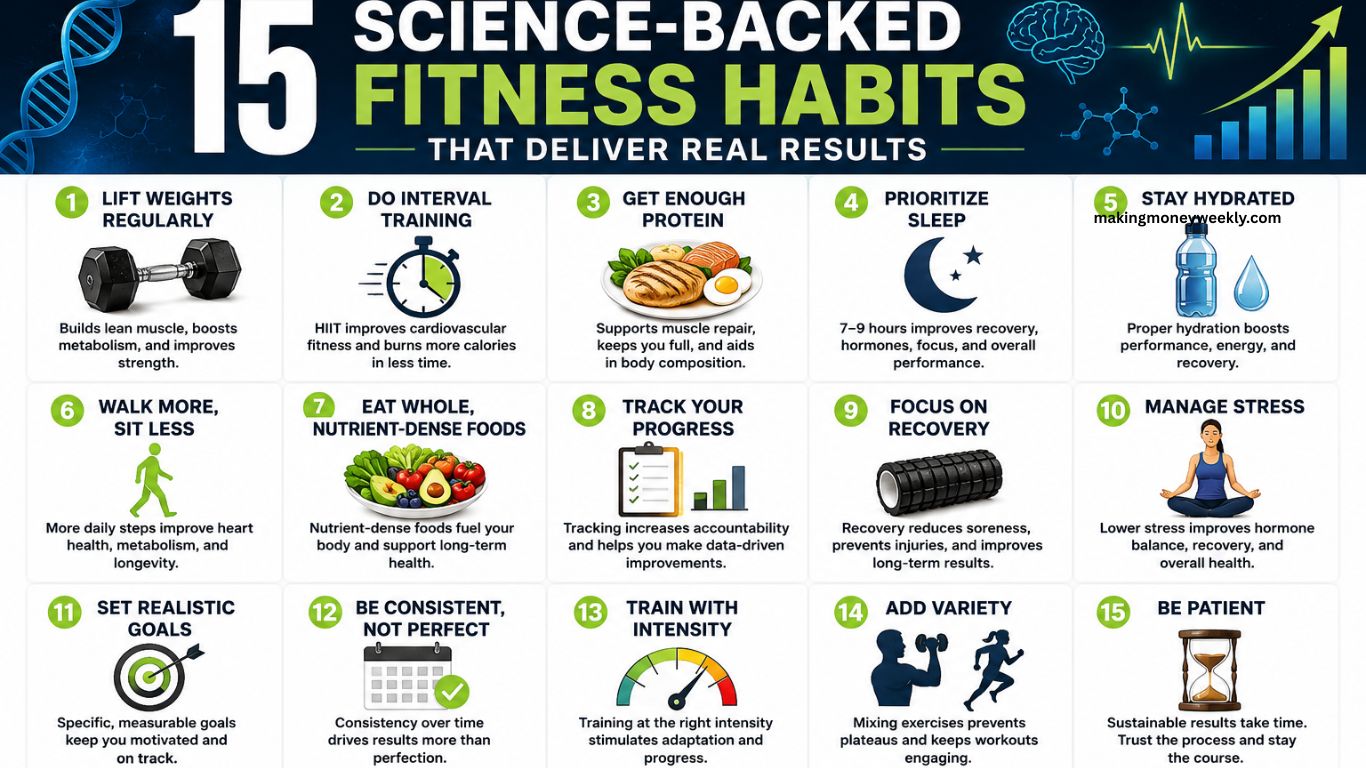
Building a healthier body does not require extreme workouts or complicated routines. Scientific research consistently shows that small, sustainable fitness habits create lasting improvements in strength, endurance, metabolism, and overall well-being. When healthy actions become part of daily life, fitness goals become easier to achieve and maintain.
This guide explores fifteen science-backed fitness habits that produce measurable results. Each habit is supported by proven principles that help improve physical performance, increase energy, reduce injury risk, and support long-term health. By following these practical strategies, anyone can create a stronger foundation for lifelong fitness success.
Read More: Best Fitness Tips for Faster Weight Loss and Better Health
Build Consistency Before Intensity
Consistency remains one of the strongest predictors of fitness success. Research shows that regular exercise performed several times each week delivers better long-term results than occasional high-intensity sessions. Developing a routine allows the body to adapt gradually while reducing the risk of burnout.
Small improvements repeated over time create remarkable transformations. Staying active every week builds momentum that supports lasting progress.
Prioritize Strength Training
Strength training improves muscle mass, bone density, posture, and metabolic health. Scientific studies demonstrate that resistance exercises help preserve lean muscle while increasing calorie expenditure even during rest.
Regular strength sessions also improve balance, mobility, and functional movement, making everyday activities easier and reducing the likelihood of injury.
Focus on Progressive Overload
Muscles grow stronger when they receive gradually increasing challenges. Progressive overload involves adding more resistance, repetitions, or training volume over time.
This principle encourages continuous adaptation and prevents fitness plateaus. Small increases performed consistently lead to significant improvements in strength and endurance.
Never Skip Proper Warm-Up
A dynamic warm-up prepares muscles, joints, and the cardiovascular system for exercise. Increasing blood circulation before workouts enhances flexibility and movement quality while lowering injury risk.
Even a short warm-up improves performance by activating major muscle groups and improving coordination before demanding physical activity.
Make Recovery Part of Training
Recovery plays a critical role in muscle repair and performance improvement. During rest periods, the body rebuilds muscle tissue, restores energy stores, and adapts to previous workouts.
Ignoring recovery often leads to fatigue, poor performance, and increased injury risk. Balanced training always includes adequate recovery time.
Sleep for Better Performance
Quality sleep directly affects athletic performance, muscle growth, hormone production, and mental focus. Research consistently links sufficient sleep with faster recovery and improved workout quality.
Adults who prioritize seven to nine hours of sleep often experience better energy levels and greater physical performance.
Stay Properly Hydrated
Water supports nearly every function involved in physical activity. Hydration regulates body temperature, transports nutrients, lubricates joints, and maintains endurance.
Even mild dehydration can reduce exercise performance, making consistent water intake an essential fitness habit.
Eat Balanced Protein Throughout the Day
Protein provides the building blocks needed for muscle repair and growth. Scientific evidence suggests distributing protein intake across meals supports better muscle protein synthesis than consuming most protein in one sitting. Combining protein with nutrient-rich foods promotes recovery and sustained energy.
Include Cardiovascular Exercise
Cardio training strengthens the heart, improves lung capacity, and enhances endurance. Walking, jogging, cycling, swimming, and rowing all contribute to better cardiovascular health.
Regular aerobic activity also supports healthy blood pressure, improved circulation, and effective weight management.
Train Mobility Regularly
Mobility exercises improve joint movement and muscle flexibility while supporting better posture and movement efficiency. Better mobility allows individuals to perform exercises with proper technique and reduced discomfort. Daily mobility work contributes to smoother movement patterns and healthier joints.
Pay Attention to Exercise Technique
Proper exercise form increases training effectiveness while reducing unnecessary stress on muscles and joints. Controlled movement improves muscle activation and decreases injury risk. Learning correct technique creates a safer and more productive fitness journey.
Track Fitness Progress
Monitoring workouts helps identify improvements and maintain motivation. Recording weights, repetitions, workout duration, or body measurements provides valuable feedback. Progress tracking also makes it easier to adjust training plans when improvement slows.
Fuel the Body with Nutritious Foods
Exercise performance depends heavily on proper nutrition. Whole foods rich in vitamins, minerals, healthy fats, complex carbohydrates, and lean proteins provide sustained energy and support recovery. Balanced nutrition helps maximize workout performance while improving overall health.
Manage Daily Stress
Chronic stress increases cortisol levels, which may interfere with muscle recovery, sleep quality, and exercise motivation. Stress management supports better physical performance and overall wellness.
Relaxation techniques, breathing exercises, and mindful movement contribute to healthier recovery and improved focus.
Set Realistic Long-Term Goals
Clear and achievable fitness goals improve motivation and consistency. Breaking larger objectives into smaller milestones creates regular achievements that encourage continued progress. Science supports goal-setting as an effective strategy for maintaining exercise habits over extended periods.
Create Sustainable Daily Habits
Long-lasting fitness success depends on routines that fit naturally into everyday life. Sustainable habits require less motivation because they become automatic behaviors.
Choosing activities that are enjoyable increases adherence and makes healthy living easier to maintain throughout every stage of life.
Why Science-Backed Habits Produce Better Results
Scientific fitness principles focus on gradual improvement, proper recovery, balanced nutrition, and consistent effort rather than quick fixes. Evidence-based habits reduce injury risk while promoting sustainable physical improvements. Instead of chasing temporary trends, proven methods build stronger bodies, healthier minds, and greater confidence over the long term.
Common Mistakes That Slow Fitness Progress
Many people expect immediate changes and become discouraged when results take time. Skipping recovery, inconsistent workouts, poor nutrition, inadequate sleep, and unrealistic expectations often limit progress. Correcting these common mistakes allows the body to adapt efficiently and achieve measurable improvements with greater consistency.
Frequently Asked Questions
What are science-backed fitness habits?
Science-backed fitness habits are exercise and lifestyle practices supported by scientific research to improve health, strength, and overall fitness.
How long does it take to see fitness results?
Most people notice improvements within 4 to 8 weeks with regular exercise, proper nutrition, and adequate recovery.
Is strength training necessary for everyone?
Yes. Strength training helps build muscle, improve bone health, boost metabolism, and support overall physical function for all ages.
Why is recovery important in fitness?
Recovery allows muscles to repair, reduces injury risk, improves performance, and helps the body adapt to training.
How much sleep is best for fitness progress?
Adults should aim for 7 to 9 hours of quality sleep each night for optimal recovery and performance.
Can walking improve fitness?
Yes. Regular walking improves cardiovascular health, burns calories, enhances endurance, and supports overall wellness.
Why should I track my workouts?
Tracking workouts helps measure progress, maintain motivation, identify improvements, and adjust your fitness plan effectively.
Conclusion
Science continues to confirm that lasting fitness comes from consistent habits rather than extreme efforts. Building strength, prioritizing recovery, eating nutritious foods, staying hydrated, sleeping well, and maintaining regular exercise all contribute to meaningful improvements in health and performance.
