

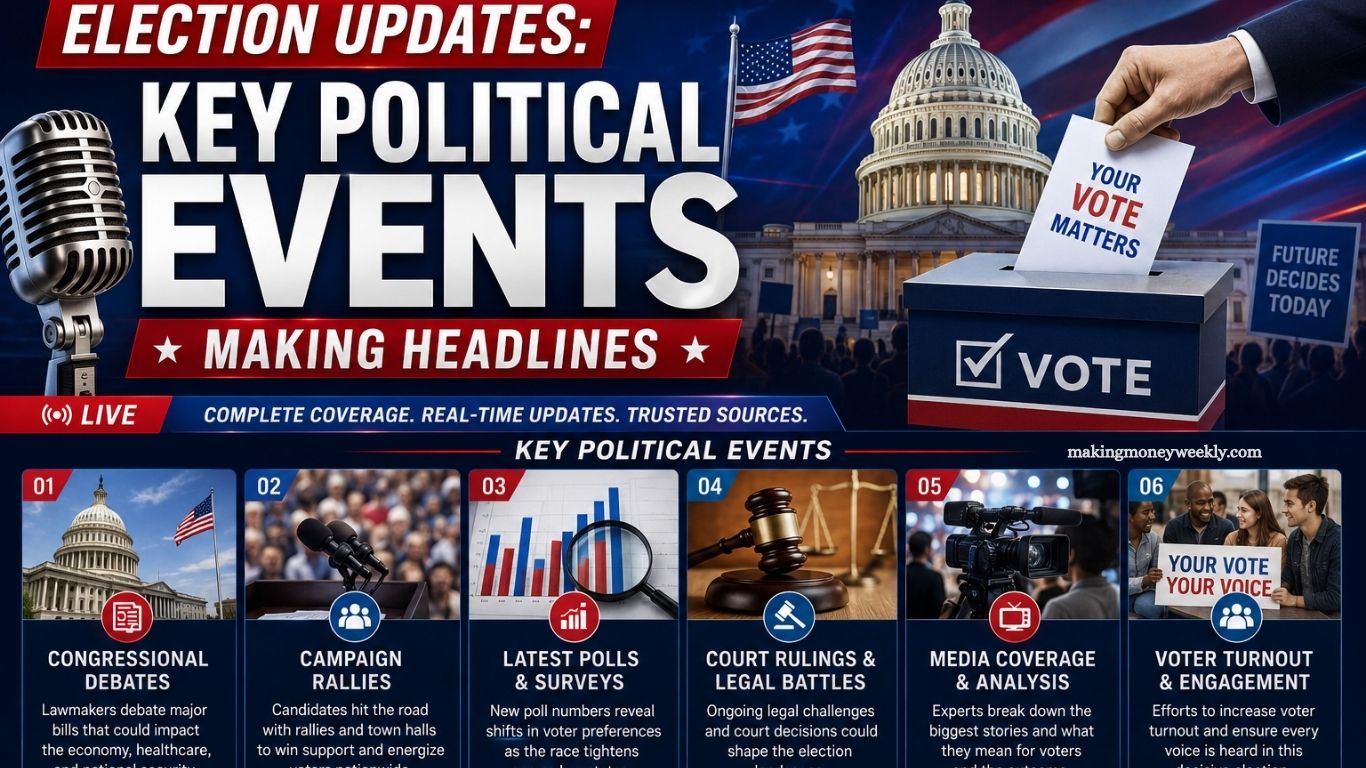
Election updates continue shaping political conversations worldwide as voters, political parties, candidates, and governments respond to major developments. Campaign strategies, voter sentiment, policy debates, election schedules, and polling trends are influencing public discussions across different regions.
Political events can change quickly during an election cycle. New alliances, campaign announcements, debates, court decisions, polling movements, and voting preparations can affect the direction of an election. Understanding these developments helps readers follow important political changes without getting lost in constant headlines.
Read More: How New Government Policies Could Affect Millions of People
Major Election Developments to Watch
Election campaigns often produce significant developments as political parties compete for voter support. Candidates focus on economic conditions, employment, healthcare, education, security, taxation, infrastructure, and other issues that directly affect communities.
Party leaders also use rallies, interviews, debates, and digital platforms to communicate their positions. Strong campaign performances can increase visibility, while controversial statements or policy disputes can create new challenges.
Campaign Strategies Shape Political Competition
Modern election campaigns rely heavily on data, social media, television coverage, public events, and targeted messaging. Political parties increasingly study voter preferences to understand which issues matter most to different groups.
Campaign strategies can change throughout an election period. A candidate may shift attention toward economic concerns, national security, cost-of-living pressures, or social policies depending on voter priorities.
Digital campaigning has become particularly important. Social media allows candidates to reach millions of people quickly, although misinformation and misleading political content can also create challenges for voters.
Polling Trends Attract Attention
Opinion polls remain an important part of election coverage. Polls provide snapshots of voter preferences at particular moments, helping political analysts identify possible changes in public sentiment.
However, polling results should not be treated as guaranteed election outcomes. Methodology, sample size, timing, turnout assumptions, and undecided voters can influence results.
A small polling change can generate significant media attention, especially during closely contested elections. Analysts often compare several polls rather than relying on a single survey.
Political Alliances Can Change Election Dynamics
Political alliances can play an important role in determining election outcomes. Parties with similar policy positions may cooperate to strengthen their electoral prospects, while disagreements can lead to competing candidates and divided support.
Coalition discussions can become especially important when no single party appears likely to secure enough seats to govern independently. Negotiations after an election can therefore become just as significant as the campaign itself.
Election Debates Put Candidates Under the Spotlight
Election debates allow candidates to present their policies while challenging opponents. Voters often use debates to compare leadership styles, economic plans, political priorities, and responses to national challenges.
A strong debate performance can improve a candidate’s visibility, while an unexpected statement or weak response can dominate news coverage. Debate moments frequently spread across social media, making them an important part of modern political campaigns.
Economic Issues Remain Central to Elections
Economic conditions frequently influence voter decisions. Inflation, wages, employment, housing costs, taxes, interest rates, and government spending can become major campaign topics.
Candidates typically present different approaches to managing economic challenges. Voters then assess how proposed policies could affect household finances, businesses, public services, and future economic growth.
Cost-of-living concerns can become particularly influential when households experience rising prices or financial pressure.
Voter Turnout Could Influence Results
Voter turnout remains one of the most important factors during elections. High turnout can benefit different political groups depending on which communities participate at higher rates.
Political parties therefore invest considerable effort in encouraging supporters to register, vote, and participate throughout the election process.
Young voters, first-time voters, urban communities, rural voters, and traditionally less-engaged groups can become important targets for campaign outreach.
Election Rules and Voting Security
Election authorities continue focusing on secure voting systems, voter registration, ballot procedures, election infrastructure, and accurate vote counting.
Public confidence remains essential. Transparent election procedures and clear communication from election authorities can help voters understand how ballots are cast and counted.
Concerns about misinformation, cyber threats, foreign interference, and election-related disinformation have also become important topics in political discussions.
Social Media Is Changing Election Coverage
Social media has transformed how people receive election news. Political announcements can reach audiences within minutes, while campaign videos, speeches, debates, and polling discussions can quickly become viral topics.
The speed of online information also creates challenges. False claims can spread rapidly before reliable sources have an opportunity to verify them.
Readers should compare political claims across credible news organizations and official election sources before accepting major election-related information as fact.
What Voters Should Watch Next
The next stages of an election cycle can bring important changes. Campaign announcements, candidate debates, polling developments, party endorsements, policy proposals, voter registration deadlines, and election-day preparations can all influence political coverage.
Voters can make better-informed decisions by examining policies rather than focusing only on campaign personalities or individual headlines. Understanding the wider political context provides a clearer picture of what each candidate or party is offering.
Frequently Asked Questions
What are election updates?
Election updates provide information about major political developments, campaign activities, polling trends, voting procedures, and election results.
Why are election polls important?
Election polls show voter preferences at a specific point in time and can help identify changes in political sentiment.
Can polls predict election results?
Polls can indicate possible outcomes, but they cannot guarantee results because voter turnout and late campaign changes can affect elections.
Why do political alliances matter?
Political alliances can combine voter support and influence candidate competition, especially in elections involving multiple parties.
How does social media affect elections?
Social media helps campaigns reach voters quickly while also creating challenges involving misinformation and unverified political claims.
What issues usually influence voters?
Economic conditions, employment, healthcare, education, security, taxes, inflation, and public services often influence voter decisions.
How can voters follow reliable election information?
Voters should consult official election authorities and reputable news organizations while comparing important claims across multiple sources.
Conclusion
Election updates provide an important view of political changes taking place during campaigns and voting periods. From polling trends and campaign strategies to economic issues, political alliances, debates, and voter turnout, several factors can shape an election. Following reliable information and understanding the broader political context allows voters to evaluate developments more effectively.
