

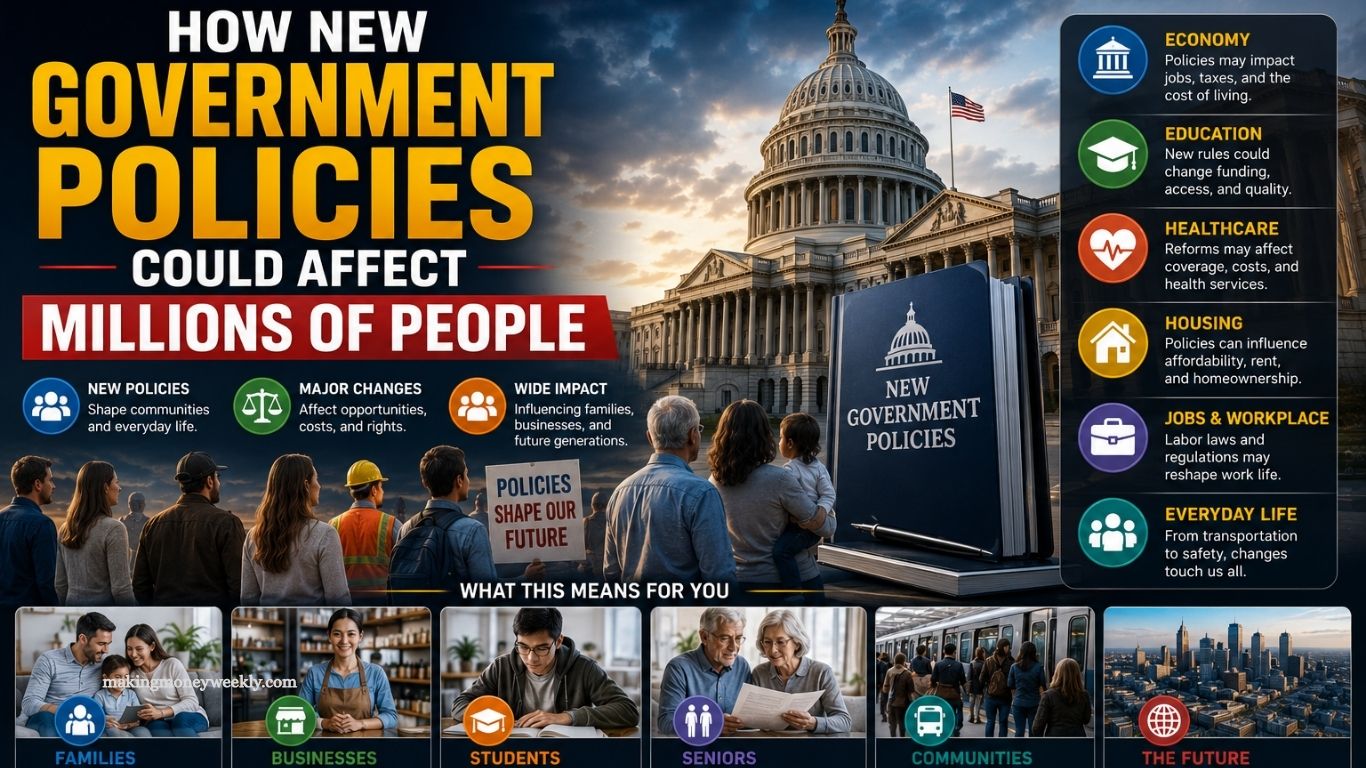
Government policies can shape everyday life in ways people may not immediately notice. Changes to taxes, healthcare, employment, education, housing, social benefits, and digital services can influence household budgets, business decisions, and access to essential services.
New government policies often create both opportunities and concerns. Understanding how these changes may affect workers, families, businesses, students, retirees, and vulnerable communities can help people prepare for possible financial and social impacts.
Read More: Top Political Stories Shaping the Future in 2026
Why New Government Policies Matter
Government policies establish rules that influence how public services, businesses, and individuals operate. A new policy may change eligibility requirements, introduce financial support, increase costs, or create new responsibilities for citizens and companies.
Even a policy targeting one sector can have wider effects. For example, changes in business taxes may influence prices, hiring decisions, wages, or investment. Similarly, changes to housing regulations can affect rent, property prices, construction activity, and homeownership opportunities.
Impact on Household Finances
One of the most noticeable effects of government policy can involve household finances. Changes to income taxes, sales taxes, energy costs, subsidies, or benefit programs can alter the amount of money families have available each month.
Lower-income households may feel these changes more strongly because a larger share of their income typically goes toward essential expenses. Middle-income families may also experience changes through tax adjustments, childcare costs, healthcare expenses, or education-related support.
Government assistance programs can provide additional financial protection when eligibility expands. However, reduced benefits or stricter requirements could place additional pressure on households that depend on public support.
Changes for Workers and Employees
Employment policies can have a direct effect on millions of workers. Governments may introduce new minimum wage rules, workplace protections, overtime requirements, parental leave policies, or employment regulations.
Higher minimum wages can increase earnings for eligible workers while also raising labor costs for employers. Businesses may respond by changing prices, staffing levels, working hours, or investment plans.
Remote work regulations, employee classification rules, and workplace safety requirements can also influence how companies organize their workforce. Workers should pay attention to changes affecting contracts, benefits, taxes, and employment rights.
Effects on Healthcare Access
Healthcare policy remains one of the most important areas of government decision-making. Changes involving insurance coverage, public healthcare funding, prescription costs, or eligibility programs can affect access to medical services.
Expanded healthcare support may reduce financial pressure for families and improve access to treatment. Funding reductions or eligibility changes could produce the opposite effect, particularly for people who rely heavily on government-supported healthcare programs.
Healthcare policies can also influence hospitals, doctors, insurers, pharmaceutical companies, and other providers. These changes may eventually affect service availability and healthcare costs.
Education and Students
Government decisions can significantly influence students, parents, teachers, and educational institutions. Policies involving school funding, university support, student loans, tuition assistance, and vocational training can determine how affordable education becomes.
Additional funding may improve educational resources, technology, teacher recruitment, and infrastructure. Changes to student financial aid can also affect whether students choose higher education, vocational programs, or other career pathways.
Families should monitor policy changes that affect education costs, scholarships, grants, and loan repayment requirements.
Housing and Cost of Living
Housing policies can influence both renters and homeowners. Governments may introduce measures involving rental regulations, property taxes, mortgage assistance, construction incentives, or affordable housing programs.
Policies designed to increase housing supply could help address shortages over time. Financial assistance may also make homeownership more accessible for qualifying households.
However, housing regulations can have different effects depending on location and market conditions. Renters, landlords, developers, and homeowners may experience the same policy in very different ways.
Small Businesses and Entrepreneurs
New policies can create opportunities while increasing compliance requirements for businesses. Changes to corporate taxes, licensing rules, labor laws, environmental standards, and reporting requirements may affect operating costs.
Small businesses can be particularly sensitive to regulatory changes because they often have fewer financial and administrative resources than large corporations.
Tax credits, grants, financing programs, and simplified regulations can support entrepreneurship. On the other hand, higher compliance costs may discourage expansion or hiring.
Technology and Digital Privacy
Government policies increasingly cover technology, artificial intelligence, cybersecurity, and personal data. New regulations may establish rules for how companies collect, store, process, and use consumer information.
Stronger privacy protections can give people greater control over personal data. Artificial intelligence regulations may also influence how businesses develop and deploy automated systems.
Consumers could see changes in privacy notices, online services, advertising practices, and data-sharing options as companies adjust to new requirements.
Effects on Retirees and Older Adults
Retirement programs and healthcare policies can have major consequences for older adults. Changes to pension systems, retirement benefits, healthcare coverage, or tax treatment may influence long-term financial planning.
Retirees living on fixed incomes can be especially sensitive to inflation and changes in essential expenses. Policy adjustments affecting benefits or healthcare costs may therefore have a significant impact on financial security.
People approaching retirement should review official announcements and understand how policy changes could affect their expected benefits.
Environmental and Energy Policies
Environmental policies can affect households and businesses through energy prices, transportation rules, building standards, and incentives for cleaner technology.
Government support for renewable energy may encourage investment in solar power, electric vehicles, and energy-efficient products. Regulations affecting fossil fuels can influence energy markets and operating costs across several industries.
Consumers may experience these changes through utility bills, transportation expenses, product prices, and available incentives.
Who Could Be Most Affected?
The impact of new government policies is rarely equal across society. Workers, low-income families, businesses, students, retirees, homeowners, renters, and consumers may experience different outcomes.
The timing of a policy also matters. Some changes produce immediate effects, while others take years to influence employment, investment, housing supply, or public services.
Understanding eligibility rules and implementation dates can help people determine whether a new policy directly affects them.
How People Can Prepare for Policy Changes
Staying informed is one of the simplest ways to prepare. People should follow official government announcements and review information from reliable public agencies rather than relying solely on social media posts or unverified claims.
Households can also review their budgets, benefits, taxes, insurance, and major financial commitments when significant policy changes are announced.
Businesses should monitor regulatory updates and evaluate how new requirements could affect staffing, expenses, pricing, and long-term planning. Professional financial or legal advice may be useful when changes involve complex tax, employment, or regulatory issues.
Why Policy Changes Can Take Time to Show Results
Government policies do not always produce immediate results. A new law may require regulations, funding arrangements, administrative systems, or implementation periods before people notice meaningful changes.
Economic conditions can also influence outcomes. Inflation, interest rates, employment levels, consumer demand, and global markets may strengthen or weaken the effects of a policy.
For this reason, it is important to distinguish between the announcement of a policy and its actual long-term impact.
Frequently Asked Questions
How can new government policies affect ordinary people?
Policies can influence taxes, benefits, healthcare, education, employment, housing, prices, and access to public services.
Can government policies affect the cost of living?
Yes. Tax changes, energy regulations, subsidies, housing policies, and business rules can influence household expenses.
Do government policies affect small businesses?
Yes. Taxes, labor regulations, licensing requirements, grants, and compliance rules can change business costs and opportunities.
Can new policies affect employment?
Employment policies can influence wages, workplace protections, hiring practices, benefits, and employer costs.
How do government policies affect healthcare?
Healthcare policies can change eligibility, funding, insurance coverage, prescription costs, and access to medical services.
Why should people follow policy implementation dates?
Implementation dates show when new rules, benefits, requirements, or financial changes are expected to take effect.
Where can people find reliable policy information?
Official government websites, public agencies, and verified government announcements are generally the best sources for current policy information.
Conclusion
New government policies can affect millions of people through changes to taxes, employment, healthcare, education, housing, business regulations, technology, and public benefits. The impact can vary widely depending on income, age, employment status, location, and eligibility. Understanding policy changes before they take effect gives individuals and businesses more time to adjust their financial and practical plans.
