

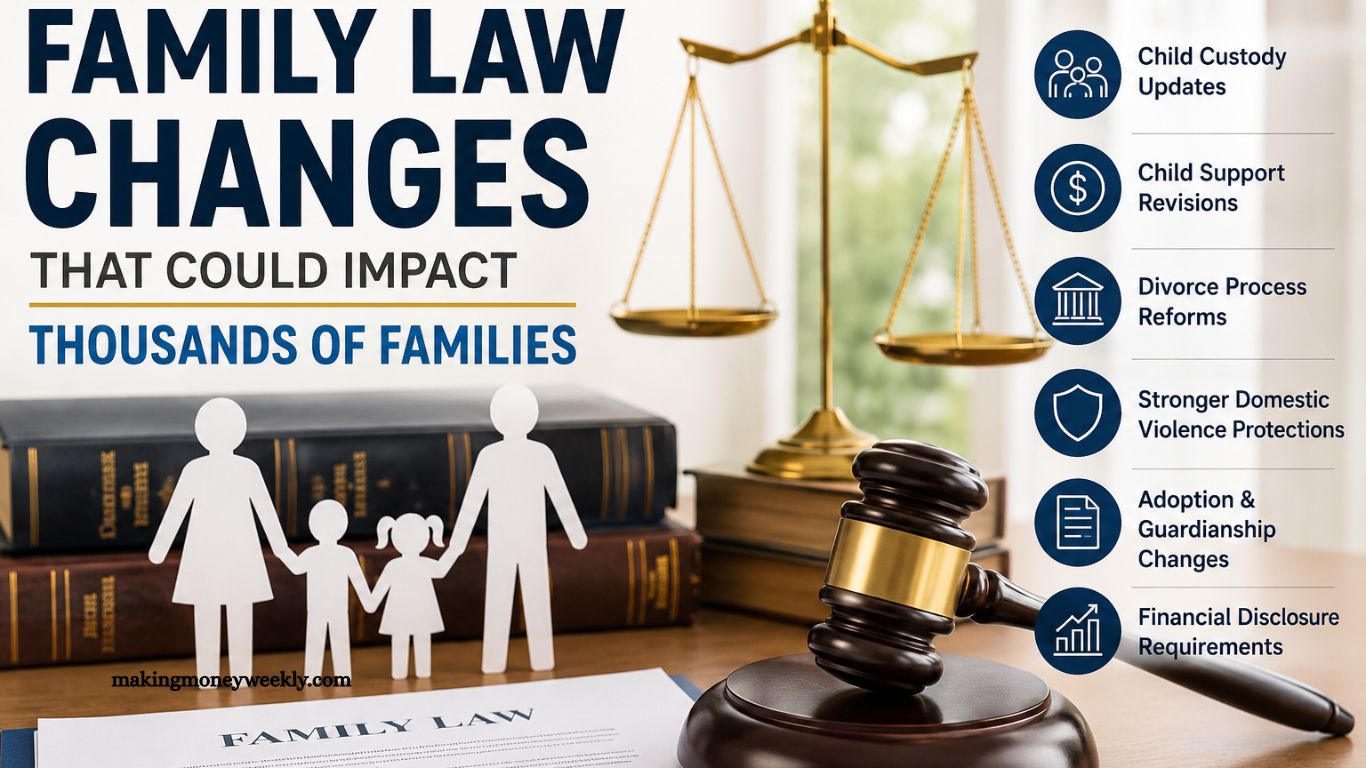
Family law continues evolving to address modern family structures, financial realities, child welfare concerns, and changing social expectations. Recent family law changes have attracted significant attention because they may affect thousands of families dealing with divorce, child custody, child support, spousal maintenance, adoption, and parental rights.
Understanding these legal developments remains essential for parents, guardians, spouses, and family members. Awareness helps families make informed decisions, protect legal rights, and prepare for potential changes affecting daily life.
Read More: Choosing the Right Lawyer for Your Legal Case
Why Family Law Changes Matter
Family law influences some of life’s most important relationships. Legal updates can affect financial responsibilities, parenting arrangements, property division, and children’s well-being.
Legislators and courts often introduce reforms to improve fairness, strengthen child protection measures, streamline legal processes, and reflect changing family dynamics. While these changes aim to create better outcomes, many families may need to adjust existing agreements and future plans.
Child Custody Rules Receiving Greater Attention
One major area experiencing reform involves child custody arrangements. Courts increasingly prioritize children’s emotional, educational, and developmental needs when determining parenting plans.
Recent legal trends encourage greater involvement from both parents whenever possible. Judges may place stronger emphasis on shared parenting responsibilities, provided such arrangements support a child’s best interests.
Families involved in custody disputes should review current legal standards because updated guidelines may influence future court decisions and custody agreements.
Key Considerations
- Child-centered decision-making
- Shared parenting opportunities
- Enhanced protection measures
- Stronger focus on stability and well-being
Child Support Calculations Becoming More Comprehensive
Child support regulations continue changing in many jurisdictions. Updated formulas often consider additional financial factors, including healthcare expenses, educational costs, childcare services, and parental income fluctuations.
These modifications aim to ensure children receive adequate financial support while maintaining fairness between parents.
Parents currently paying or receiving child support may benefit from reviewing existing arrangements to determine whether legal updates could affect payment obligations or entitlements.
Divorce Proceedings Moving Toward Greater Efficiency
Family courts increasingly seek faster and less adversarial divorce processes. Many jurisdictions have introduced measures designed to reduce delays, lower legal costs, and encourage dispute resolution outside traditional courtroom settings.
Alternative dispute resolution methods, including mediation and collaborative law, continue gaining popularity because they help families reach agreements with less conflict.
Benefits of Modernized Divorce Procedures
- Reduced legal expenses
- Faster case resolution
- Lower emotional stress
- Improved cooperation between parties
- Better outcomes for children
Domestic Violence Protections Expanding
Family law reforms frequently strengthen protections for individuals facing domestic abuse or family violence. Updated legislation may provide broader definitions of abusive behavior, including emotional, psychological, financial, and digital abuse.
Enhanced legal protections can help victims access protective orders more quickly and receive additional support throughout legal proceedings.
These changes reflect growing recognition that family safety remains a fundamental priority within modern legal systems.
Adoption and Guardianship Regulations Evolving
Adoption laws continue adapting to meet changing family needs. Recent reforms often focus on simplifying procedures, reducing unnecessary delays, and promoting permanent family placements for children requiring care.
Guardianship regulations have also received attention, particularly concerning grandparents, relatives, and other caregivers who play significant roles in children’s lives.
Families considering adoption or guardianship should remain informed about eligibility requirements, documentation standards, and procedural updates.
Financial Disclosure Requirements Increasing
Transparency has become a major focus within family law. Courts increasingly require detailed financial disclosure during divorce, support, and property division proceedings.
Stricter disclosure standards help ensure equitable outcomes and reduce opportunities for hidden assets or incomplete financial reporting.
Individuals entering family law proceedings should prepare accurate records related to income, investments, property ownership, debts, and expenses.
Impact on Existing Family Agreements
Many families wonder whether new laws automatically change existing court orders or legal agreements. In most cases, current arrangements remain valid unless modified through legal procedures.
However, significant legal reforms may create opportunities for review under certain circumstances. Families experiencing substantial changes in financial situations, parenting responsibilities, or living arrangements may wish to seek professional legal guidance.
Preparing for Family Law Changes
Proactive preparation can help families navigate legal developments more effectively.
Practical Steps
- Review existing family law agreements.
- Stay informed about legislative updates.
- Maintain accurate financial records.
- Prioritize children’s best interests.
- Seek qualified legal advice when necessary.
- Consider mediation before litigation.
Early preparation often reduces uncertainty and supports smoother transitions when legal changes occur.
Frequently Asked Questions (FAQs)
What are the latest family law changes affecting families?
Recent family law changes focus on child custody arrangements, child support calculations, divorce procedures, domestic violence protections, adoption regulations, and financial disclosure requirements. These updates aim to improve fairness, efficiency, and child welfare.
How can family law changes affect child custody decisions?
Updated custody laws often place greater emphasis on the best interests of the child. Courts may encourage shared parenting arrangements when appropriate while prioritizing a child’s safety, stability, and emotional well-being.
Will new family law rules change existing custody or support orders?
Existing court orders generally remain valid. However, significant legal changes or major life circumstances may allow parents to request modifications through the court system.
How do new child support regulations impact parents?
New child support guidelines may consider additional factors such as healthcare costs, education expenses, childcare fees, and changes in parental income. These adjustments help ensure fair financial support for children.
Are divorce proceedings becoming easier under recent family law reforms?
Many jurisdictions are introducing streamlined divorce processes, mediation programs, and alternative dispute resolution methods. These measures can reduce costs, shorten timelines, and minimize conflict between spouses.
What protections do updated family violence laws provide?
Modern family law reforms often expand legal protections against physical, emotional, psychological, financial, and digital abuse. Victims may have quicker access to protective orders and support services.
How do family law changes affect adoption and guardianship?
Recent reforms may simplify adoption procedures, reduce waiting periods, and improve guardianship processes for relatives and caregivers seeking legal responsibility for children.
Conclusion
Family law changes continue shaping relationships, responsibilities, and legal protections for thousands of families. Updates involving child custody, child support, divorce procedures, domestic violence protections, adoption regulations, and financial disclosure requirements may significantly influence future family law cases.
