

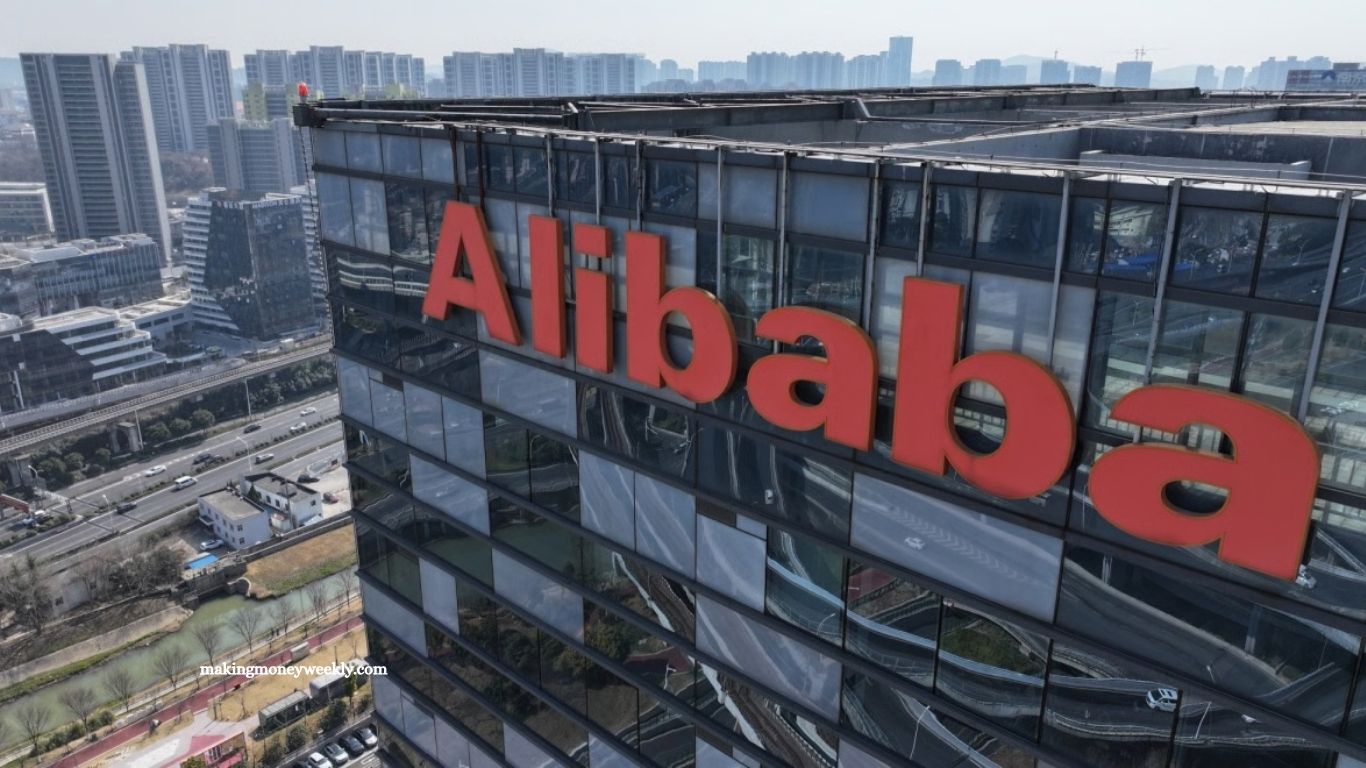
Alibaba has unveiled a powerful new AI computing cluster built around 10,000 chips developed by its semiconductor design arm, T-Head. The system forms the core of what the company calls a high-performance, fully domestic compute infrastructure aimed at strengthening China’s AI capabilities.
According to local reports, the Zhenwu cluster is powered by a next-generation networking architecture that achieves ultra-low latency of just 4 microseconds, enabling all 10,000 chips to operate as a single, tightly integrated supercomputer. This design allows the system to train large-scale models with hundreds of billions of parameters efficiently.
Alibaba claims the cluster improves overall training and inference performance by 30 percent, while increasing single-card throughput by nearly ten times. Already deployed in sectors like healthcare and advanced manufacturing, the infrastructure will also be opened to SMEs through China Telecom, offering flexible pay-as-you-go access by card or hourly usage.
Read More: AI, Political Dynamics, and Celebrity Advocacy: Navigating Global Investment Opportunities
China’s Homegrown AI Stack Takes Shape
A Rapid Shift in China’s AI Infrastructure Landscape
China’s artificial intelligence sector is entering a new phase defined by self-reliance, scale, and rapid infrastructure expansion. The country’s latest developments in domestic AI clusters signal a clear move away from dependence on foreign semiconductor technologies and toward a fully localized compute ecosystem. This shift is not happening gradually—it is unfolding at high speed across both private and public sectors, reshaping how AI systems are built, trained, and deployed.
At the center of this transformation is a growing network of AI clusters powered entirely by domestically developed chips and software systems. These clusters are designed not only to deliver high-performance computing but also to ensure that data remains within national boundaries, a key priority for regulators and enterprises operating in sensitive sectors.
From Hardware Replacement to Software Collaboration
Speaking to the South China Morning Post (SCMP), Charlie Zheng, chief economist at Samoyed Cloud Technology Group Holdings, described this transition as a structural evolution in China’s AI strategy. According to Zheng, the country’s AI ecosystem is moving beyond the early stage of “hardware replacement,” where the focus was primarily on substituting foreign chips with local alternatives.
Instead, the industry is now entering a phase of “software collaboration,” where hardware and software systems are being developed in parallel to achieve tighter integration and higher efficiency. This shift reflects a more mature technological approach, where performance gains are no longer driven solely by chip design, but by how effectively systems are optimized at scale.
Zheng emphasized that this integrated approach is enabling faster deployment of AI clusters across multiple industries, particularly in government services and urban governance systems.
Government and City Governance Lead Adoption
One of the most significant trends in China’s AI expansion is the rapid adoption of domestic computing clusters in government-related sectors. These include city management platforms, public administration systems, and digital governance frameworks that require large-scale data processing and real-time decision-making capabilities.
According to industry observers, these sectors have become early adopters because they place strong emphasis on data control and security. The need to ensure that sensitive information remains within domestic infrastructure has made locally built AI systems especially attractive.
Zheng noted that “strict requirements around data sovereignty and security are driving the fastest adoption in these sectors.” This regulatory environment has created strong demand for computing systems that are not only powerful but also fully compliant with national data governance rules.
As a result, domestic AI clusters are increasingly being integrated into urban infrastructure projects, where they support functions such as traffic management, public safety monitoring, emergency response systems, and administrative automation.
Expansion of AI Clusters Built on Domestic Chips
The rollout of Alibaba’s large-scale AI cluster is part of a broader national trend toward building high-performance computing systems using homegrown semiconductor technology. Alibaba’s system, which is built on chips designed by its T-Head semiconductor division, reflects how major Chinese tech companies are investing heavily in internal chip development capabilities.
At the same time, other industry players are following similar strategies. Reports indicate that another major AI computing cluster has been developed in China using processors entirely designed by Huawei. This parallel development highlights a coordinated push across multiple technology firms to establish independent AI infrastructure.
Together, these projects represent more than isolated technological achievements. They signal the emergence of a domestic AI stack—an integrated ecosystem that includes chips, networking systems, cloud platforms, and AI training frameworks, all developed within China.
The Role of US Export Restrictions
A major factor accelerating this shift has been the ongoing export restrictions imposed by the United States on advanced semiconductor technologies. These restrictions have limited Chinese companies’ access to cutting-edge GPUs and high-performance AI chips traditionally supplied by American firms.
Rather than slowing progress, however, these constraints have intensified China’s push for self-sufficiency. Companies such as Huawei and Alibaba have increased investment in chip design, while also developing alternative architectures optimized for domestic production capabilities.
This policy environment has effectively acted as a catalyst, encouraging Chinese firms to accelerate innovation in semiconductor design and reduce reliance on global supply chains. The result is a rapidly evolving ecosystem that prioritizes resilience and independence over external integration.
Building a Fully Integrated AI Ecosystem
The long-term goal of these developments is the creation of a fully integrated AI ecosystem that spans from chip manufacturing to cloud-based AI services. In this model, hardware and software are developed together to maximize efficiency, reduce latency, and improve scalability.
Alibaba’s recent cluster deployment illustrates this approach in action. By combining domestically designed chips with high-speed networking architecture and distributed computing systems, the company is aiming to create supercomputer-level performance using tightly synchronized chip networks.
Similar strategies are being adopted across the industry, with companies focusing on optimizing system-level performance rather than relying solely on individual chip advancements.
Increasing Access for Enterprises and SMEs
Beyond government and enterprise-scale applications, there is also a growing effort to democratize access to high-performance AI infrastructure. Alibaba has announced plans to make its computing cluster accessible to small and medium-sized enterprises (SMEs), allowing them to tap into advanced computing resources without the need for large upfront investments.
Through partnerships with telecom infrastructure providers such as China Telecom, businesses will be able to access computing power on a flexible pay-as-you-go model. This includes billing by individual chips or hourly usage, making advanced AI training and inference capabilities more accessible to a wider range of companies.
This model is expected to significantly expand AI adoption across sectors such as healthcare, manufacturing, logistics, and financial services, where smaller firms previously lacked access to high-end computing resources.
Implications for the Global AI Race
The rapid expansion of China’s domestic AI stack has significant implications for the global technology landscape. As Chinese firms continue to develop their own semiconductor ecosystems, the global AI supply chain is becoming increasingly fragmented along geopolitical lines.
While the United States and its allies continue to lead in certain areas of advanced chip design, China’s focus on system-level integration and large-scale deployment is creating a parallel innovation pathway.
Rather than competing solely on individual chip performance, the competition is increasingly centered around ecosystem efficiency, scalability, and control over infrastructure.
Frequently Asked Questions
What is Alibaba’s new AI cluster?
Alibaba’s new AI cluster is a large-scale computing system powered by 10,000 chips designed by its semiconductor arm, T-Head, built to train and run advanced AI models efficiently.
What makes the Zhenwu cluster special?
The Zhenwu cluster uses a high-performance networking architecture with ultra-low latency of just 4 microseconds, allowing all chips to function as a single supercomputer.
How much performance improvement does the system offer?
Alibaba claims the system improves AI training and inference efficiency by around 30%, while boosting single-chip throughput by nearly 10 times.
Where is the AI cluster currently being used?
It is already deployed in sectors such as healthcare and advanced manufacturing, with further expansion planned.
Can smaller companies access this computing power?
Yes. Alibaba plans to offer access to SMEs through China Telecom’s platform, allowing pay-as-you-go usage by chip or hourly billing.
How does this fit into China’s AI strategy?
It reflects China’s shift toward building a fully domestic AI stack, reducing reliance on foreign semiconductors and strengthening data sovereignty.
Why are domestic AI clusters growing quickly in China?
Experts say strict data security and sovereignty requirements, especially in government and city governance, are accelerating adoption.
Conclusion
China’s accelerating push into homegrown AI infrastructure marks a clear turning point in the global technology landscape. With large-scale projects like Alibaba’s 10,000-chip cluster and parallel developments from companies such as Huawei, the country is steadily building a fully integrated AI ecosystem powered by domestic hardware and software.
This shift is not just about replacing foreign chips but about creating a complete, self-reliant computing stack that supports everything from government systems to enterprise AI applications.
